


Malta: A Mediterranean Interlude
- Apr 29
- 9 min read
Updated: May 1
Amidst Civil Litigation preparation, Malta was a spontaneous escape! Beyond the first glance of Mediterranean clear blue water, golden stone, and coastal living, Malta offers a much older and denser history: fortified cities, medieval towns, and harbours shaped by centuries of trade, siege, and survival – truly an unmistakably open-air museum.

I based myself between St Julian’s and Sliema, overlooking Balluta Bay, during short 3 clear days' stay. The location was excellent, while Valletta’s winding streets, Mdina’s silence, ferry rides to the Three Cities, and spontaneous swimming spots were within reach.
What I didn’t expect was how much contrast Malta holds within such a small space. In just a few days, I moved between energy and stillness, history and contemporary living – from lush cactus-lined landscapes to the open sea, and from noise and silence – all within the span of a few hours. This blog chronicles the highlights that made my trip unforgettable, alongside additional destinations which await my return.
PAGE CONTENT:
Mdina
Rabat
Blue Grotto
Valletta
The Three Cities
St Julians
Balluta Bay
BEFORE YOU GO:
Tourism. Tours and excursions can be pre-booked via sites including GetYourGuide and Booking.com. If contemplating on either independent or guided explorations, I highly recommend a combination of both, however starting with independent. Many locations offer spontaneous guided tour options on arrival – including boat trips, small train tours, and electric buses (ranging between €3 to €5).
Travel. Uber and Bolt are widely available, though prices can rise during peak hours. Public busses are affordable (around €2 for a two-hour ticket), however, busses are quite delayed, take significantly longer to reach destinations, and can be horrifically crowded during peak hours as well. Ensure extra travel time if relying on them.
Where to Stay. Staying in Valletta places you at the heart of Malta’s history. For a slow cosmopolitan coastal base, Sliema is a short ferry, bus, or car ride from Valletta. Just north of Sliema is St Julians, which is a more bustling coastal alternative. I was based right between Sliema and St Julians, across Balluta Bay, and would not have preferred anywhere else.
Safety. Malta is described as the safest country in Europe and my experience reflected that statement!
E-SIM. SIM cards are significantly cheaper outside of the airport. However, for convenience, Airalo offers e-SIMs in over 200 countries. Quick, easy, reliable. Use Code TASNIA7978 for €3 OFF your first e-SIM.
Don't forget your camera!
The Silent City
~ Mdina ~
Perched on a hill in the heart of Malta, Mdina, a UNESCO World Heritage Site, feels less like a destination and more like stepping into a piece of preserved memory. Its fascinating history with evidence of settlement dating before 4000 BC, and layers of influence from the Phoenicians, Romans, Arabs, and Normans, Mdina stands as one of the island’s oldest and most captivating places. As a history buff, naturally, Mdina was my first stop. It took only about an hour to explore all of the Mdina, a small fortified space of about 0.9 square kilometres and comprising 150 residents currently.

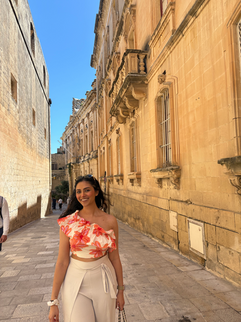

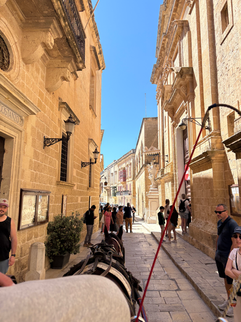


The city reached its peak in the medieval period when it served as Malta’s capital, until the arrival of the Knights of St John in 1530. The popular name “Silent City” emerged when the capital shifted to Valletta. Today, it lives up to its name with its narrow, honey-stone streets, and hushed alleyways, ironically preserving its original character.


While other cities expanded and modernised, Mdina remains frozen in time – its aristocratic palazzi, baroque façades, and fortified walls largely untouched, making it an ideal starting point to exploring the island.
Exploring Mdina: a Few Highlights of Medieval Malta
Vilhena Gate
Look familiar? The grand Baroque entrance to the city, built in 1720. Instantly recognisable, and yes, a familiar backdrop for Game of Thrones fans! The city gates open into quiet streets where horse-drawn carriages still pass, and balconies overflow with flowers against golden limestone walls like a film set that forgot to stop filming.

Vilhena Palace
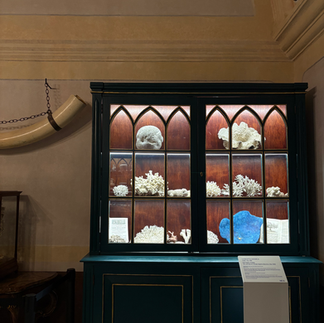
Located just to the right after entering, this French Baroque palace once served as the residence of the Grand Master. Today, it houses the National Museum of Natural History.
Mdina Dungeons Museum
Situated near the main gate, the Dungeons Museum rests underground featuring passageways, chambers and cells that provide a chilling glimpse of Malta’s harsh punishments from the past.
Ride a Horse-drawn Carriage
The horse-drawn carriages in Mdina offer an experience back in time, alongside guided commentary around the old town.


St. Peter’s Monastery and Church


Mdina Bastions Square
For sweeping views across the island.

Beyond the Walls
~ Rabat ~
Sitting quietly beyond the walls of Mdina, Rabat, meaning fortified town or suburb in Arabic, is a small town in Malta’s west-central region. It is a stretch of the oldest areas of Malta, housing many historical landmarks and cultural treasures, deserving a quick visit!


A visit here would be incomplete without exploring St Paul's Catacombs. These extensive underground passageways offer a glimpse into early Christian burial practices and the realities of life and death in Roman Malta.
The Fortress City Built from Fire and Faith
~ Valletta ~
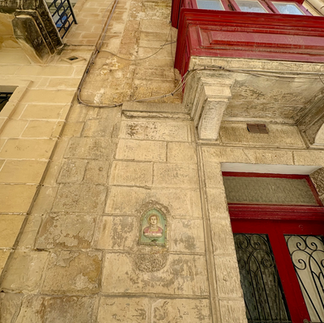
Set on a rugged peninsula overlooking the Grand Harbour, Valletta, Malta’s capital, lives up its reputation as a UNESCO-listed open-air museum! It is compact, sun-bleached, and intensely structured – a grid of limestone streets framed by honey-coloured Baroque façades, colourful mashrabiyyas – an architectural echo of earlier Arab influence on the island, and sudden openings to sea views that stop travellers mid-step.

Unlike Mdina’s quiet medieval stillness, Valletta is a city born out of urgency. It was formally founded in 1566 by the Knights of St John after the Great Siege of Malta in 1565, one of the most pivotal battles in Mediterranean history, when the Knights and Maltese defenders repelled the Ottoman Empire.
Alongside being inhabited by eight different civilizations and powers throughout history, including the Phoenicians, Greeks, Carthaginians, Romans, Byzantines, Arabs, Knights of St John, French, and British, many iconic scenes from Game of Thrones, Troy, Spartacus, and Gladiator were also filmed in the immediate vicinity of Valletta, particularly around the Grand Harbour in Kalkara and on Manoel Island!





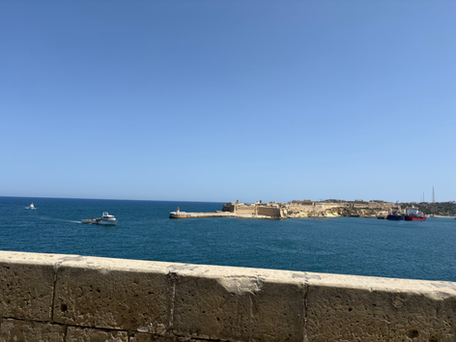
Exploring Valleta
While pre-arranged walking tours are widely available, I opted for an on-site guided electric bus tour (just €5), which provided a structured overview before commencing exploration further on foot. A few highlights were as follows.
Grandmaster's Palace
The Grandmaster’s Palace was a personal favourite, as a lover of palaces. The ornate Palace was once the seat of power for the Knights of St John, evidencing that back in the day men went to war and were princesses. The Palace is now home to Malta’s presidency and rich historical interiors.


St John's Co-Cathedral
Unassuming from the outside, yet famously breathtaking within – home to intricate marble floors and works by Caravaggio (I unfortunately missed St John's Co-Cathedral due to time, but it remains one of Valletta’s most iconic sites).
Upper (and Lower) Barrakka Gardens
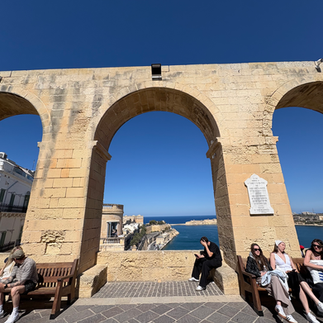
Among the best viewpoints in the city, overlooking the Grand Harbour. The Upper Barrakka Gardens offer a front-row view of the ceremonial cannon firing (scheduled twice a day), while the Lower Gardens provide a quieter alternative.


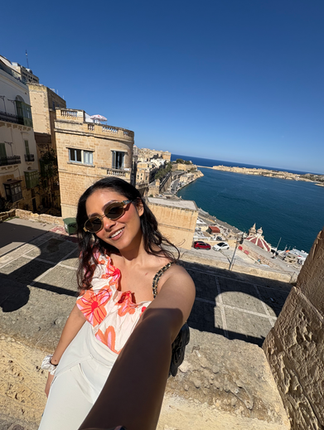
Streets of Valletta
Republic Street and Merchant Street are two of the main touristy streets in Valletta. I found upon aimlessly exploring that nearly every street was lined with shops, cafés, restaurants, stunning mashrabbiyyas, constant movement, and revealing glimpses of the sea - worth exploring.


Fort St Elmo
Fort St Elmo is a key site during the Great Siege of 1565, now housing the National War Museum.
Ferry or Traditional Boat Ride to The Three Cities
A short ride across the harbour offering one of the best views of Valletta’s skyline from the water (€3 each way). I took the traditional boat ride from the Three Cities.
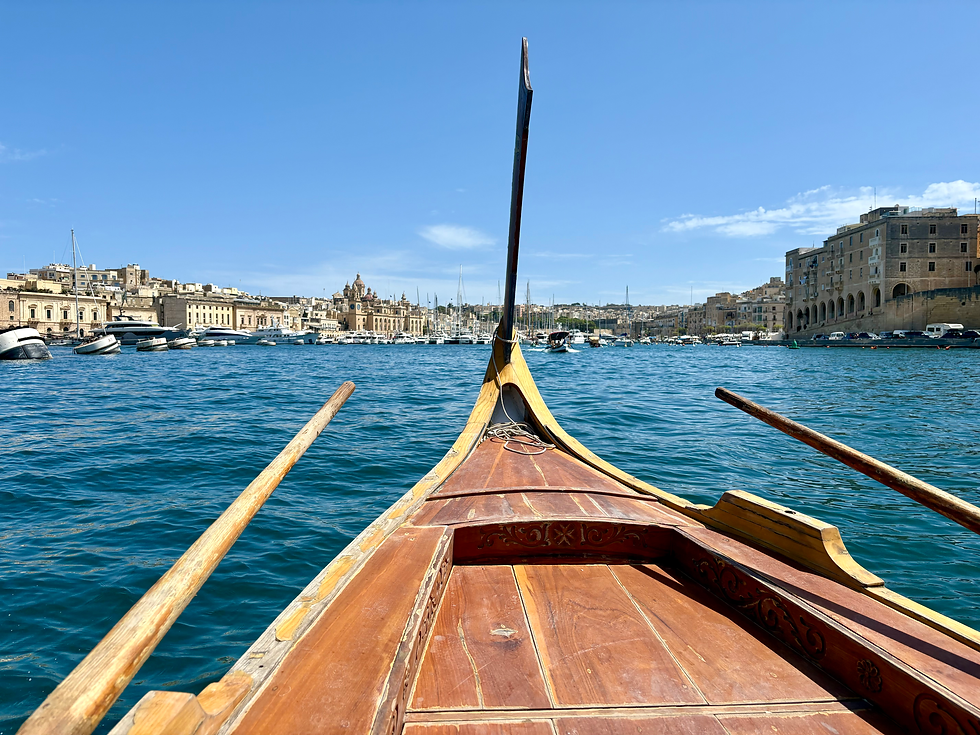
Valletta truly displays Malta’s story. Every street, façade, and fortification reflects a city shaped not for beauty alone, but for survival – influenced by the many empires that came across the island and have left their mark behind.

Where the Sea Lights Itself
~ Blue Grotto ~
A visit to the Mediterranean is, of course, incomplete without a dip. With only a few days on the island, I debated between a full-day trip north to Blue Lagoon and Gozo, or a shorter escape south to the Blue Grotto. I chose the latter, and it was, without question, a great decision! The waters were nothing short of spectacular. As sunlight hit the caves and reflected through the sea, the entire coastline seemed to glow from within – an electric, almost surreal blue that feels impossible to replicate. It’s not just clear; it’s luminous.

Getting to the Grotto required a short scenic trek. Small boat rides are available to explore the surrounding network of six sea caves up close (bring €10 in cash). The contrast between the rugged limestone cliffs and the shimmering water created a scene that felt both raw and cinematic. Under one of the caves, the sunlight transformed the water and everything within into a radiant blue – an unmissable wonder.

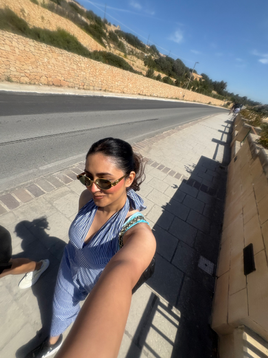




While the water was still cold in late April, swimming in God’s natural crystal-clear Mediterranean pool was a must. Blue Grotto delivered something unforgettable – a reminder of the power of the sun, the sea, and the way the two can transform something as simple as water into something extraordinary.


The Fortress City Built from Fire and Faith
~ Three Cities ~

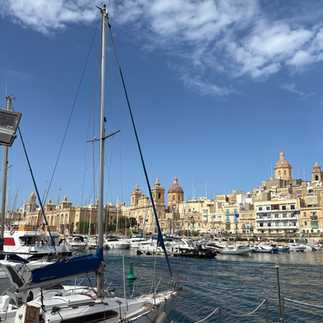
Following the Blue Grotto, I made my way across the island to the Three Cities – Vittoriosa (Birgu), Senglea (Isla), and Cospicua (Bormla). Birgu served as my starting point, and felt like the liveliest of the three. Though overshadowed by Valletta today, the Three Cities were once allegedly the beating heart of Malta’s defence, naval power, and daily life under the Knights of St John. This is where the Great Siege of 1565 was fought and where Malta’s survival as a Christian stronghold was shaped.


I began with a short guided train ride before taking a traditional boat across to Valletta, both of which were available from Birgu, across the Parish Church of St Lawrence. The Three Cities felt intimate, lived-in, and quietly grounded, contrasting to Valletta’s energy (which was more to my preference). Regardless, exploring the winding narrow streets between limestone buildings, harbourside walkways, and fortification walls were worth the short, charming visit. I also unintentionally fulfilled my little Mama Mia moment!



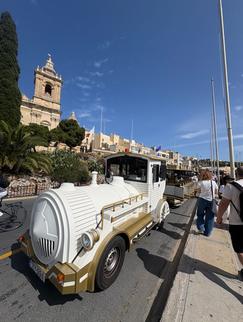
Where the Island Comes Alive at Night
~ St Julians ~
St Julian’s is Malta’s buzzing contemporary area, known for its nightlife and entertainment. While I was solo travelling in Malta, I made a friend and was blessed to have spent two days exploring the island together! We spontaneously made our way to explore the island’s modern, social side – Paceville, the heart of Malta’s nightlife, where the energy was immediate and unapologetically lively.


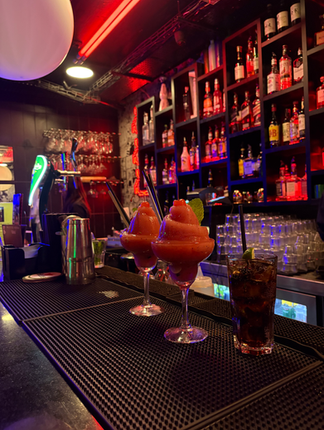
The music leaned heavily into 2000s classics, familiar, and impossible not to enjoy. The street was filled with people moving between bars and clubs, yet what stood out most was how safe and welcoming St Julian's was. Apart from nightlife, along St Julian’s waterfront, the Maltese continue dancing out in the open. Families, couples, and groups of friends move to music under the stars and by the sea, making the island unexpectedly wholesome.


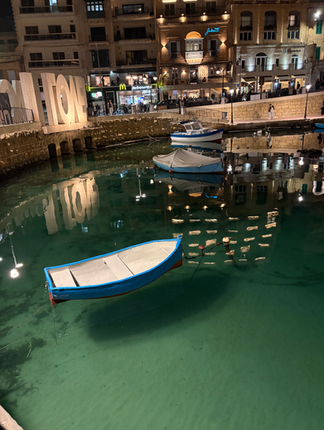
St Julian’s is a reminder that Malta’s charm doesn’t lie with its history, but in music, movement, and the simple joy of being present.
By the Sea and Under the Stars
~ Balluta Bay ~
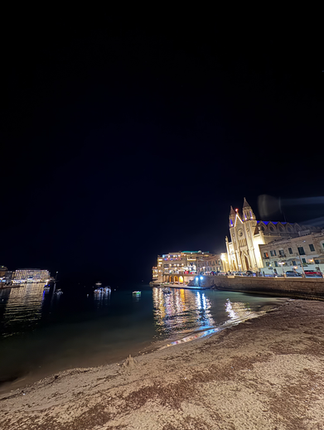
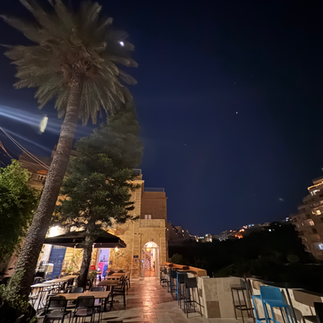
My first impression of Malta began with Balluta Bay when my Uber dropped me off after dark. Malta welcomed me with the sea and the stars – two of my all-consuming obsessions! During my time in Malta, based just across from Balluta Bay Beach, the location proved to be both convenient and quietly perfect.

Tucked between the liveliness of St Julian's and the more polished pace of Sliema, Balluta Bay offered the best of both worlds. It was close enough to everything, yet calm enough to feel like a retreat. One of its biggest draws is the beach itself – one of the nearest sandy stretches in the area, and ideal for a quick swim. The water is clear, refreshing, and easily accessible, luring my return at various points during my time. The harbour is constantly moving whether early in the morning with swimmers or joggers, or under the glow of the evening.


Pastries, Gelatos, and the Mediterranean Table
~ The Maltese Food Scene ~
Malta’s food scene feels deeply tied to its surroundings, shaped by the sea, tradition, and a slower, more social way of living. From my experience, menus leaned heavily towards fresh seafood and rabbit dishes, both staples of Maltese cuisine, often served in cosy, harbourside restaurants where meals stretch easily into the evening. Sadly, I’m not a fan of seafood and bunnies are too cute to consume, so my options were vastly limited to surviving off carbs for a few days, namely, savoury pastries and gelatos.


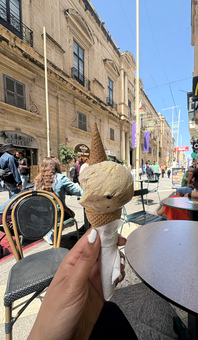
Traditional Maltese pastries that were quick, comforting, and endlessly satisfying between exploring were pastizzi – a flakey cheese or pea paste-filled pastry, and qassatat – a slightly larger pastry filled with chicken, spinach, or cheese. One small find stood out in particular: Sphinx Pastizzeria, where I tried some of the best Maltese pastries of the trip, rich with flavour. Gelato during European summer is a self-explanatory constant companion.






Bringing the Journey Home
~ Memories from Malta ~
Though not everything worth keeping can be held, bringing home small treasures that reflect a journey and a destination’s character has always been one of my favourite parts of returning from travels.


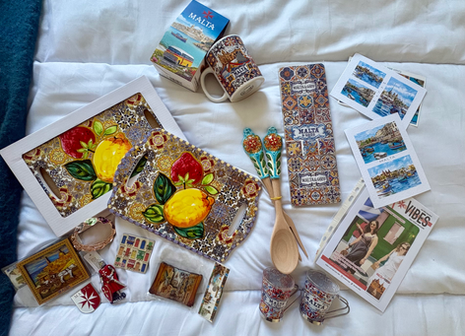
Malta offers all the familiar keepsakes – magnets, postcards, and locally crafted trinkets, but what stood out most to me were the Mediterranean ceramics. Handcrafted, sun-washed in colour, and adorned with intricate Maltese patterns, I’ve added a few more pieces to my growing collection though they await a kitchen of their own. One of the most unexpected souvenirs came from the streets of Valletta. A local photographer captured candid moments and transformed them into printed “newspaper-style” portraits, making a unique print to bring home.




Gallery
~ Malta in Motion ~




















More of Malta? Visit Blue Lagoon (Comino), Gozo, Marsaxlokk, St Peter's Pool, Ħaġar Qim & Mnajdra Archaeological Park, Popeye Villiage, and more!
Enjoyed what you read? Have questions or suggestions? Connect with me by subscribing or simply follow my social media platforms for more posts, stories, and highlights!
INSTAGRAM: @tmozammel

Comments